Brick Stabilisation
Conservation-grade lime and traditional brick methods are used to consolidate exposed walls, repoint loose courses, and protect the structural fabric from monsoon erosion and biological growth.
Mission & Preservation
The mission of the Shalban Vihara heritage programme is, at its simplest, to keep faith with what the bricks themselves represent: more than a thousand years of disciplined attention to learning, compassion, and the cultivation of a just society.
That mission expresses itself through five enduring commitments — to the physical fabric of the monument, to its archaeological record, to the visitors who meet it, to the communities that surround it, and to the global research conversation in which it participates.
None of these commitments can be discharged in isolation. Together they constitute a coherent custodial vision — one that places the long-term wellbeing of the site above any short-term consideration of throughput, footfall, or visibility.
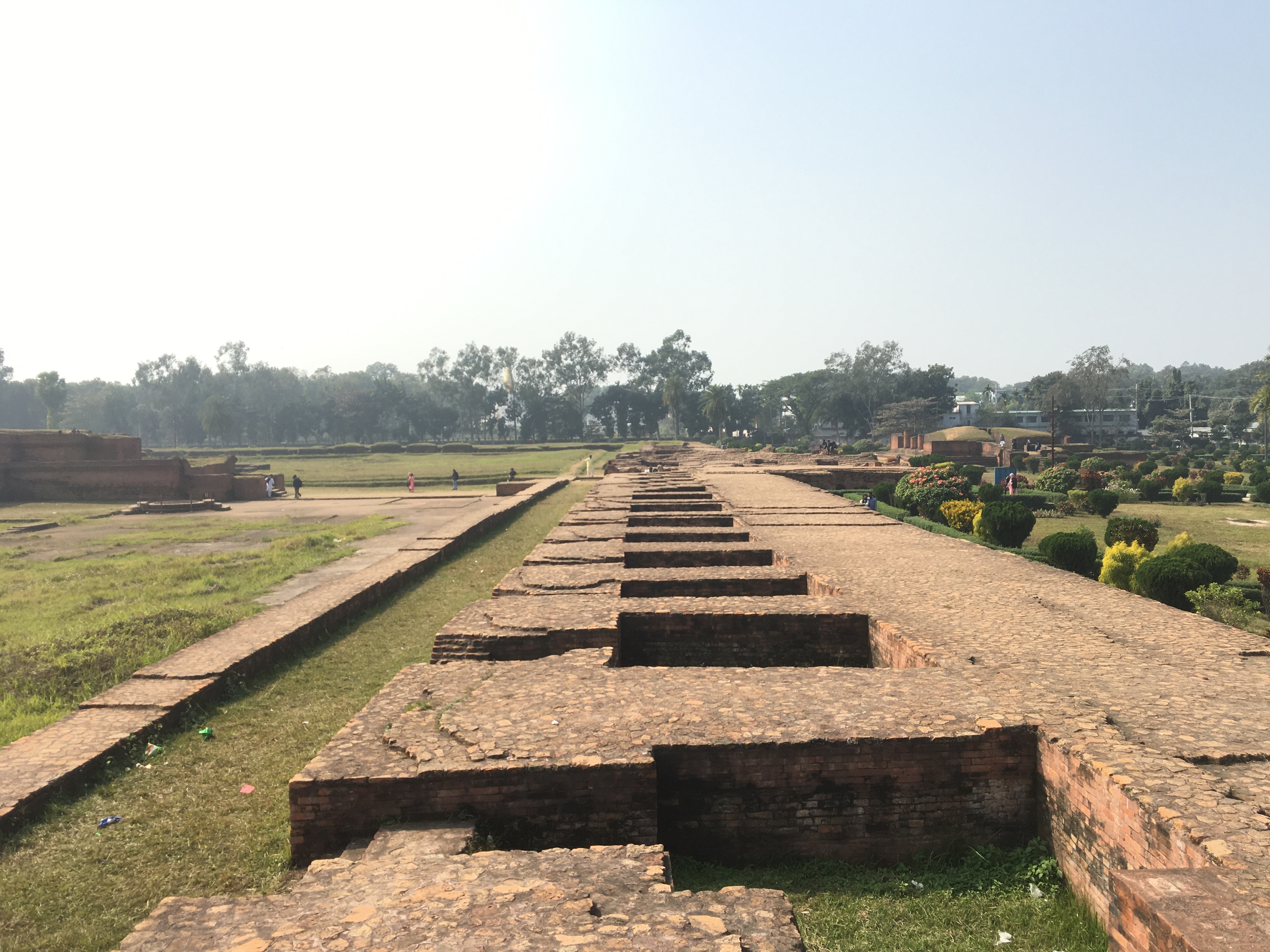
The archaeological preservation programme at Shalban Vihara works on two parallel registers — the physical stabilisation of the standing remains, and the responsible stewardship of the buried stratigraphy that still lies undisturbed beneath the ridge.
Conservation-grade lime and traditional brick methods are used to consolidate exposed walls, repoint loose courses, and protect the structural fabric from monsoon erosion and biological growth.
Unexcavated portions of the site are deliberately reserved for future generations of archaeologists, who will carry better tools, sharper questions, and lighter methods than those available to us today.
Photogrammetric models, drone surveys, and high-resolution photographic archives create a comprehensive digital record of the monument — a permanent reference even where physical loss may eventually occur.
The most generous gift a heritage site can offer its visitors is the gift of an unmediated encounter — the opportunity to stand within an ancient courtyard and let it do its quiet work on the imagination.
Our visitor strategy therefore prioritises the quality of that encounter over its scale. We work to keep visitor numbers within the carrying capacity of the monument, to provide thoughtful interpretive material, and to invite every visitor into a relationship of care rather than mere consumption.
In practice, this means trained guides, modest signage that informs without overwhelming, designated walking paths that protect the brick fabric, and a long-term plan to develop the visitor experience in close consultation with the local community.
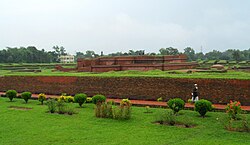
Curated visits and classroom-friendly material introduce schoolchildren in Cumilla and beyond to the architectural and ethical legacy of their region's monastic past.
Co-developed field-school modules with universities in Bangladesh, India, and beyond train the next generation of archaeologists and heritage professionals on-site.
An annual lecture series, hosted at and around the site, brings leading scholars of South Asian Buddhism into conversation with local audiences and visiting researchers.
Photographs, digital reconstructions, and interpretive guides are progressively released as open-access resources for educators worldwide.
Heritage that is not loved is heritage that quietly disappears. The youth-engagement strand of our mission is therefore not an addendum but a foundation — a deliberate effort to ensure that the next generation in Bangladesh, in South Asia, and in the wider BIMSTEC region knows Shalban Vihara not as an abstraction but as a living place to which they hold a personal connection.
This work draws on the regional youth-engagement and Track-II diplomacy frameworks led by our cultural stewardship advisors, including initiatives that link heritage learning across India, Bangladesh, Nepal, and Sri Lanka through curated youth dialogues and cross-border cultural-heritage walks.
Meet the Stewardship Team
Shalban Vihara is too important to be the concern of any single institution or any single country. We actively cultivate research partnerships that bring the methodological strengths of multiple traditions to bear on the site — always in coordination with the Department of Archaeology of Bangladesh.
Joint training programmes, shared laboratories, and co-published field reports with leading South Asian and international archaeological institutions.
Scholarly partnerships focused on the manuscripts, inscriptions, and iconographic systems associated with Bengal Buddhism and the wider Pala monastic ecosystem.
Collaborations with materials scientists and conservation laboratories on brick chemistry, mortar composition, and best-practice climate-resilience strategies.
Looking ahead a generation, our restoration vision for Shalban Vihara has three coordinated objectives:
First, to bring the standing fabric of the monument to a stable conservation baseline that can withstand the climatic stresses of the coming decades.
Second, to develop the on-site Mainamati Museum and visitor experience into a world-class interpretive centre — equal in quality to comparable institutions at Nalanda and Paharpur — anchoring the wider Moinamoti zone.
Third, to position Shalban Vihara within global heritage frameworks — including UNESCO recognition and the Indo–Bangladesh civilisational dialogue — so that its safeguarding becomes a shared, regional, and ultimately global responsibility.
If you are a researcher, an institution, a CSR partner, or a heritage organisation interested in supporting the long-term care of Shalban Vihara, we would value the opportunity to speak.
Contact the Heritage Office