The Cell as Module
Each cell averages roughly 4 by 4 metres, with deep brick walls, a single doorway opening to the verandah, and small niche-recesses for sacred images, oil-lamps, and personal effects.
Architecture & Archaeology
Shalban Vihara is a foundational example of the architectural family that culminates in the great Somapura Mahavihara at Paharpur. The plan is unmistakable: a vast, square monastic enclosure with an open central courtyard, monk cells arrayed along the inner perimeter, and a single elevated shrine at the geometric centre.
This Paharpur-style typology was not arbitrary. It was a deliberate spatial expression of Mahayana Buddhist values — the equal dignity of every cell, the radial orientation of every monk's life toward the Buddha-image, and the architectural enclosure of the saṅgha within a contemplative geometry.
What is significant about Shalban Vihara is its position within this lineage. Founded in the early 8th century, it predates the largest Paharpur foundations and helps reveal how the typology evolved from earlier viharas into its mature form.
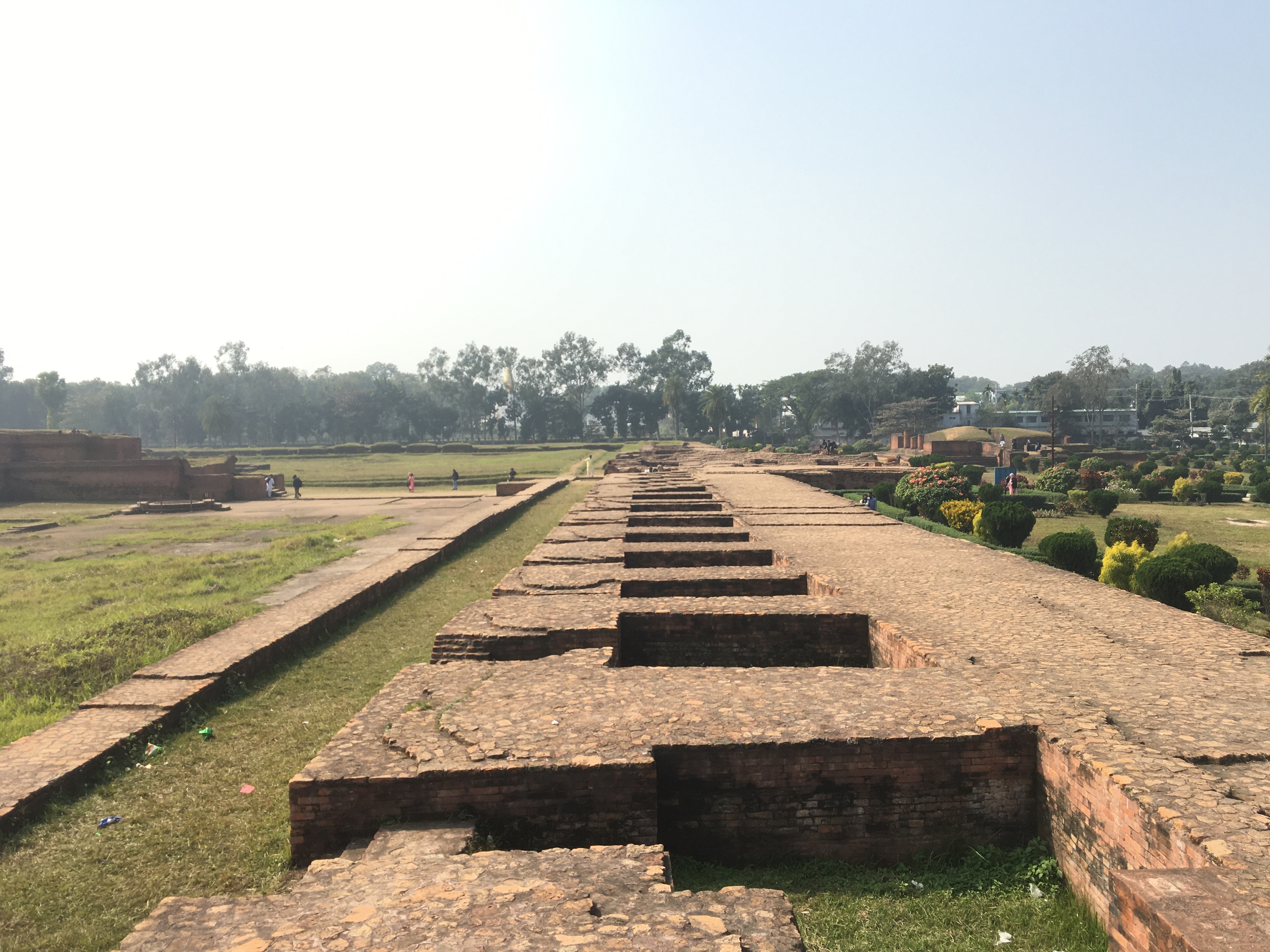
The monastery measures approximately 167.7 metres on each external side — a near-perfect square, oriented along the cardinal directions. The outer wall, formed of massive brick courses, would once have stood several storeys high, articulated with projecting bastions and a single principal gateway on the northern face.
Inside, an arcaded verandah ran along the entire perimeter, fronting 115 individual cells. Each cell opened inward toward the shared courtyard, while the shrine — a cruciform projection rising at the centre — gave the plan its devotional anchor.
This logic of enclosure and centring gives the vihara its remarkable quality: a built environment that is at once expansive and intimate, monumental and contemplative.
Schematic Plan · Quadrangular Monastery
The number of cells is not incidental. It indicates the scale of the resident community and reveals how the architects calibrated brick, beam, and corridor to the requirements of a substantial monastic university.
Each cell averages roughly 4 by 4 metres, with deep brick walls, a single doorway opening to the verandah, and small niche-recesses for sacred images, oil-lamps, and personal effects.
The cell served as bedchamber, study, scriptorium, and meditation space — the entire daily life of the monk economically arranged within a single, ritually charged room.
Lined uniformly along the inner perimeter, the cells render the saṅgha visible as architecture — a community of equals in disciplined order around the central shrine.
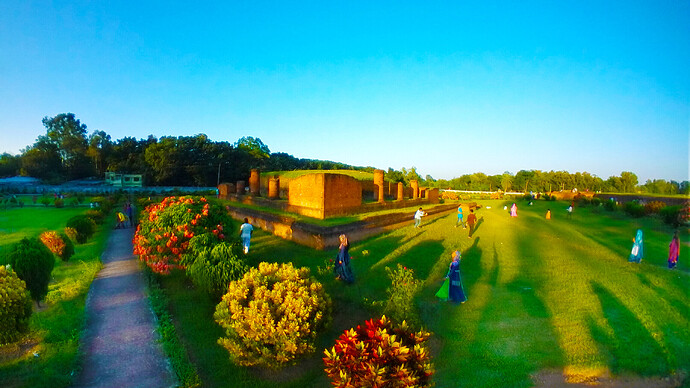
Shalban Vihara is built almost entirely of locally fired clay brick — a material chosen with care for the alluvial Bengal landscape. The bricks are remarkable for their consistency: tight tolerances of size, even firing, and precise coursing that has allowed major sections of wall to survive centuries of monsoon and erosion.
Master craftsmen produced specialised brick types — moulded bricks for ornamental string-courses, wedge-bricks for arch construction, and rectangular bricks bearing terracotta relief that decorated the exterior of the central shrine.
Royal grants engraved on copper plates, recording donations, dynastic patronage, and the legal-administrative life of the monastic community across multiple centuries.
Seated and standing Buddhas, Bodhisattvas, Tārā images, and tantric meditational deities — a corpus that defines the regional school of Bengal Buddhist bronze.
Palm-leaf and birch-bark manuscript fragments — together with ink-pots, styli, and book-cover relics — testifying to the monastery's role as a centre of textual production.
A long sequence of locally minted and imported coins — gold, silver, and base-metal — narrating dynastic patronage and the monastery's place within wider regional economies.
Specialised vessels for ritual offerings, oil-lamps, ablutions, and food-service — a quiet record of the daily devotional life of the community.
Decorated brick courses, stone door-jambs, and ornamental motifs recovered in situ that allow scholars to reconstruct the original architectural elevations.
The terracotta plaques recovered from Shalban Vihara form one of the richest single-site corpora of Buddhist relief sculpture in Bangladesh. Originally fastened to the exterior walls of the central shrine, they constituted a visual catechism — a pictorial enumeration of the Buddha's life, of bodhisattva narratives, and of the ordinary world out of which liberation must be sought.
Their iconography combines doctrinal seriousness with vernacular vitality: scenes of preaching, of meditational ascent, of musicians, dancers, animals, and trees — together they sketch a cosmology in which the path of awakening unfolds within, not against, the textures of everyday life.
The Mainamati Museum, on-site, houses the most significant of these plaques alongside the bronze and inscriptional corpus.
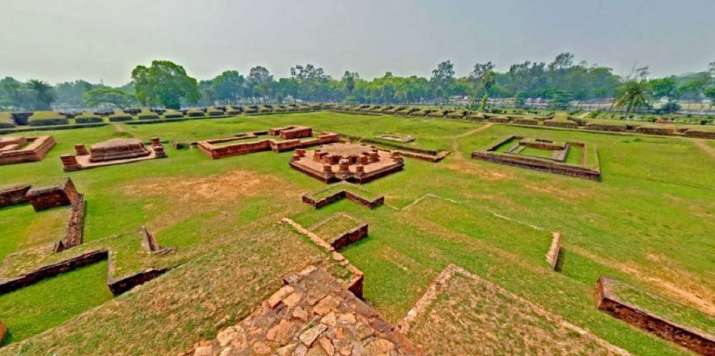
The chronology of Shalban Vihara is reconstructed from the convergence of stratigraphy, palaeography, numismatics, and stylistic analysis — a method that yields, in this case, a remarkably coherent timeline.
Initial construction under the Deva dynasty; the original quadrangular monastery and an earlier shrine occupy the central platform.
Substantial repair and renewal of cells, verandahs, and gateways; expansion of the iconographic and inscriptional corpus.
Cruciform reshaping of the central shrine and the most ambitious phase of decorative terracotta production under the Chandra dynasty.
A gradual reduction in monastic activity, eventual abandonment, and the long sleep of the site beneath the soil of the Moinamoti ridge.
Shalban Vihara presents an unusually intact stratigraphy and an unusually rich movable corpus — together they make the site a global laboratory for the study of early-medieval South Asian Buddhism. Its conservation is therefore not a parochial undertaking but a contribution to a shared planetary heritage.
Contemporary conservation work focuses on stabilising the brick fabric, protecting it from monsoon erosion, integrating the on-site Mainamati Museum with the wider ridge, and supporting non-invasive research methods — including digital documentation, photogrammetry, and remote-sensing across the Moinamoti–Lalmai zone.
Read the Preservation Mission